Keeping your home’s air ducts clean is essential for maintaining healthy indoor air quality and ensuring your HVAC system runs efficiently. Many homeowners are interested in learning how to use a vacuum for duct cleaning as a cost-effective way to reduce dust, allergens, and debris in their ventilation system. While professional duct cleaning services offer deep cleaning, you can achieve significant improvements with the right tools and approach at home.
This guide covers practical steps, equipment recommendations, and expert tips for using a vacuum to clean your air ducts. You’ll also find advice on safety, maintenance, and when to consider professional help. For those managing other HVAC maintenance tasks, you might also find it helpful to learn how to clean an HRV filter for optimal system performance.
Why Clean Your Air Ducts?
Over time, dust, pet dander, pollen, and even mold can accumulate inside your ductwork. This buildup can restrict airflow, reduce HVAC efficiency, and circulate contaminants throughout your living spaces. Regular cleaning helps:
- Improve indoor air quality by reducing allergens and irritants.
- Enhance HVAC performance and lower energy bills.
- Extend the lifespan of your heating and cooling system.
- Minimize odors caused by dust and debris.
While not every home needs frequent duct cleaning, it’s especially important if you notice visible dust, increased allergies, or after renovations.
Choosing the Right Vacuum for Duct Cleaning
Not all vacuums are suitable for ductwork. For effective results, use a vacuum with strong suction and a HEPA filter to trap fine particles. Consider these options:
- Shop vacuums (wet/dry vacs) with long hoses and attachments.
- Specialized duct cleaning vacuums, which are often available for rent.
- Household vacuums with hose extensions and brush tools (for light cleaning only).
HEPA filters are recommended to prevent dust from recirculating into your home. If you’re looking for advanced air filtration, consider investing in a HEPA air scrubber for added protection during and after cleaning.
Preparing for Duct Cleaning With a Vacuum
Before you start, gather these supplies:
- Vacuum with hose and brush attachment
- Screwdriver (to remove vent covers)
- Microfiber cloths or rags
- Protective mask and gloves
- Flashlight
Turn off your HVAC system at the thermostat and breaker to prevent dust from circulating while you work. Remove all vent covers and registers, and clean them separately with soap and water.
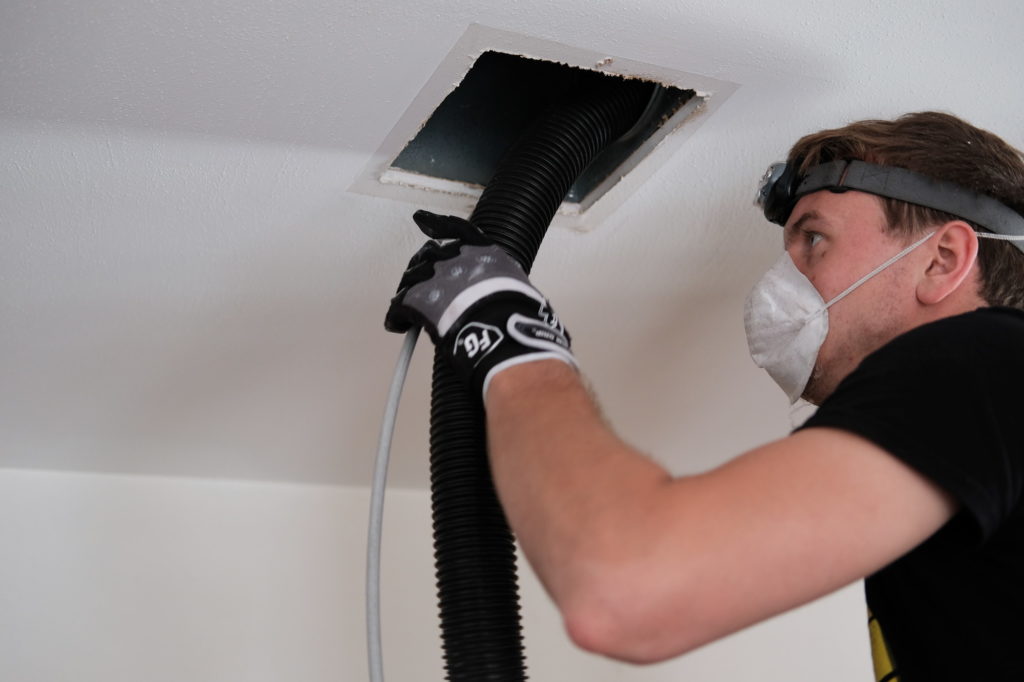
Step-by-Step Guide: Using a Vacuum to Clean Ducts
Follow these steps for effective duct cleaning using a vacuum:
- Access the ducts: With vent covers removed, use a flashlight to inspect the inside of the ductwork. Look for visible dust, debris, or mold.
- Loosen debris: Use a long, flexible brush or a broom handle to gently dislodge dust and dirt from the duct walls. Avoid damaging the duct lining.
- Vacuum thoroughly: Insert the vacuum hose as far as possible into the duct. Move it back and forth while rotating to capture loose particles. Use the brush attachment to scrub stubborn spots.
- Clean vent covers: Wash vent covers and let them dry completely before reinstalling.
- Repeat for all vents: Work through each supply and return vent in your home.
- Wipe down surroundings: Use a damp cloth to clean the area around each vent opening.
- Replace vent covers: Securely reattach all covers and turn your HVAC system back on.
For more detailed instructions and safety considerations, you can consult resources like this guide to cleaning heating and air conditioning ducts yourself.
Tips for Maximizing Results When Vacuuming Ducts
- Use the longest hose possible to reach deep into ducts.
- Seal off other vents with towels or plastic to increase suction at the vent you’re cleaning.
- Work slowly to ensure you capture as much dust as possible.
- Change or clean your vacuum’s filter after duct cleaning to maintain suction and air quality.
- Consider cleaning or replacing your HVAC filter at the same time for best results.

When to Call a Professional for Duct Cleaning
While vacuuming can remove a significant amount of dust and debris, some situations require professional attention:
- Visible mold growth inside ducts or on HVAC components
- Signs of rodent or insect infestation
- Persistent odors that don’t resolve with basic cleaning
- Severe dust buildup beyond the reach of household vacuums
Professionals use high-powered vacuums, rotary brushes, and negative air machines to clean the entire system thoroughly. If you have a multi-zone HVAC system, you may want to read about how to clean a multi zone HVAC system for more advanced maintenance tips.
Maintaining Clean Ducts After Vacuuming
To keep your ducts cleaner for longer, follow these maintenance tips:
- Change HVAC filters every 1–3 months
- Dust and vacuum your home regularly
- Keep vents and registers clear of obstructions
- Schedule professional inspections every few years
Addressing sources of dust, such as leaky ductwork or poor insulation, can also help reduce the need for frequent cleaning.
Frequently Asked Questions
Can I Use a Regular Household Vacuum for Duct Cleaning?
While a standard vacuum can help with surface dust near vent openings, it typically lacks the suction power and hose length needed for deep cleaning. A shop vacuum or a duct-specific vacuum with a HEPA filter is more effective for reaching deeper into the ductwork and capturing fine particles.
How Often Should I Clean My Air Ducts?
Most homes benefit from duct cleaning every 3–5 years, but you may need to clean more often if you have pets, allergies, recent renovations, or notice visible dust and debris. Regular filter changes and routine vacuuming can help extend the time between deep cleanings.
Is It Safe to Clean Ducts Myself?
DIY duct cleaning is generally safe if you use the right equipment and take precautions, such as turning off your HVAC system and wearing a mask. However, if you encounter mold, pests, or severe buildup, it’s best to call a professional to avoid spreading contaminants or damaging your system.
Conclusion
Learning how to use a vacuum for duct cleaning empowers homeowners to improve indoor air quality and maintain their HVAC systems with minimal expense. By following the steps and tips outlined in this article, you can safely remove dust and debris from your ducts, reduce allergens, and support a healthier home environment. For more specialized cleaning needs, such as removing charcoal dust from vents or cleaning wood stove vents, explore resources like how to remove charcoal dust from vents and how to clean a wood stove vent for targeted advice.