Ceiling vents play a crucial role in keeping your home’s air fresh and your HVAC system running efficiently. Over time, dust, pet hair, and other debris can accumulate on vent covers and inside the ductwork, reducing air quality and system performance. Many people put off cleaning these vents because they’re worried about spreading dust everywhere or creating a bigger mess than they started with. Fortunately, with the right approach, you can tackle this task efficiently and keep your home tidy in the process.
This guide will walk you through how to clean ceiling vents without making a mess, including the tools you’ll need, step-by-step instructions, and expert tips for minimizing dust and debris. You’ll also find answers to common questions and links to related resources, such as how to clean an HRV filter for broader HVAC maintenance.
Why Regular Vent Cleaning Matters
Cleaning your ceiling vents is more than just a cosmetic task. Dust and debris buildup can restrict airflow, force your HVAC system to work harder, and even contribute to allergies or respiratory issues. By keeping vents clean, you help maintain indoor air quality and extend the life of your heating and cooling equipment. Regular cleaning also prevents unsightly stains or discoloration from forming around vent covers.
Essential Tools and Supplies for Mess-Free Cleaning
Before you start, gather the following items to ensure an efficient and tidy process:
- Vacuum cleaner with a hose and brush attachment
- Microfiber cloths or dusters
- Mild soap or all-purpose cleaner
- Step ladder or sturdy stool
- Drop cloths or old sheets
- Screwdriver (if vent covers are screwed in place)
- Disposable gloves and a dust mask (optional, but helpful for allergies)
Using a vacuum with a HEPA filter is especially effective for trapping fine dust and preventing it from circulating back into the room. If you want to go the extra mile, consider using a HEPA air scrubber during cleaning to capture airborne particles.
Preparation: Protecting Your Space
To avoid spreading dust and debris, take a few minutes to prep the area:
- Lay drop cloths or old sheets beneath the vents you’ll be cleaning.
- Move furniture or valuables away from the immediate area.
- Turn off your HVAC system to prevent air movement while you work.
These simple steps will help contain any mess and make cleanup much easier.
Step-by-Step Instructions for Cleaning Ceiling Vents
Follow these steps to clean your ceiling vents thoroughly and efficiently:
- Remove the vent cover. If your vent is secured with screws, use a screwdriver to carefully take it down. Hold the cover steady to avoid dropping dust onto the floor.
- Vacuum the vent cover. Use the brush attachment to gently remove dust and debris from both sides of the cover. For stubborn grime, wipe with a damp microfiber cloth and mild soap.
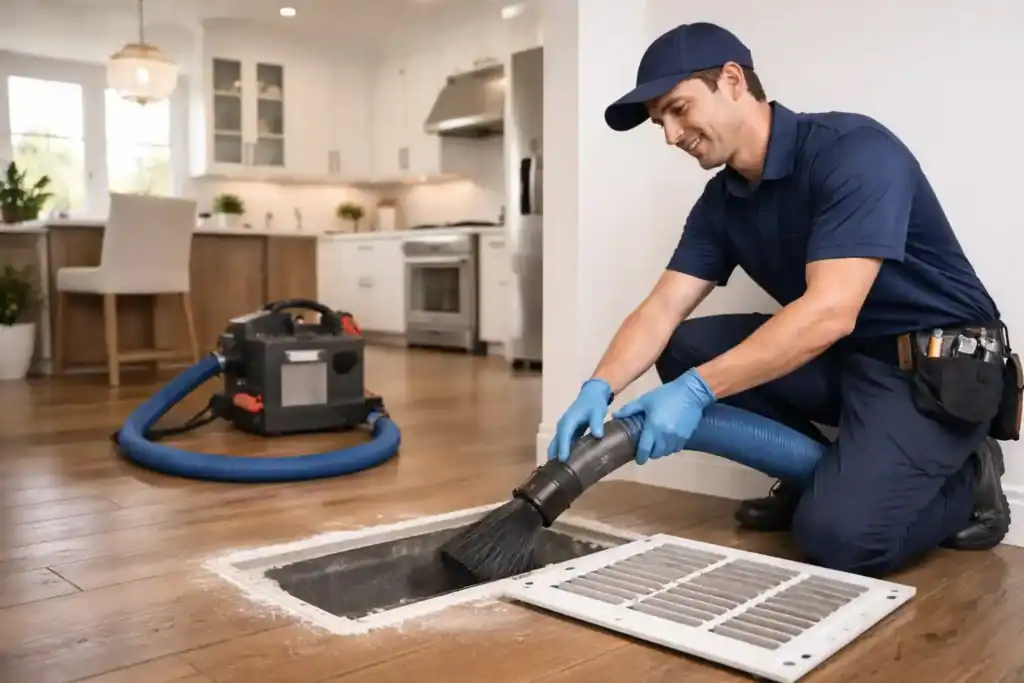
- Clean the duct opening. With the vent cover removed, use the vacuum hose to reach inside the duct as far as possible. This helps remove loose dust and prevents it from blowing back into your home.
- Wipe the ceiling area around the vent. Dust often settles on the ceiling near the vent. Use a clean, damp cloth to gently wipe this area.
- Dry and reinstall the vent cover. Make sure the cover is completely dry before putting it back in place. Secure it with screws if needed.
- Dispose of or clean your drop cloths. Shake them out outside or launder them to prevent tracking dust through your home.

Tips for Avoiding Dust and Debris Spread
One of the biggest concerns when cleaning ceiling vents is preventing dust from falling onto floors, furniture, or electronics. Here are some practical strategies:
- Vacuum first. Always use a vacuum before wiping or scrubbing to capture loose particles.
- Work slowly and gently. Quick or rough movements can dislodge more dust than necessary.
- Use damp cloths. A slightly damp microfiber cloth traps dust instead of sending it airborne.
- Contain the area. Drop cloths and moving furniture make post-cleanup much easier.
- Consider air filtration. Running a HEPA air scrubber or purifier during and after cleaning can help remove any particles that do escape.
For more advanced cleaning, especially after construction or if you notice persistent dust, you might want to learn how to remove charcoal dust from vents for deeper ductwork maintenance.
How Often Should You Clean Ceiling Vents?
Most experts recommend cleaning vent covers at least every six months. If you have pets, allergies, or live in a dusty environment, more frequent cleaning—every three months—may be beneficial. Regular maintenance not only keeps your home cleaner but also helps your HVAC system operate more efficiently.
When to Call a Professional
While routine vent cover cleaning is a manageable DIY task, there are times when professional help is needed. If you notice mold, persistent odors, or excessive dust buildup inside the ducts, it’s best to contact a certified air duct cleaning service. For more information on deep cleaning and ductwork maintenance, check out this detailed guide to cleaning air ducts from industry experts.
Additional Maintenance Tips for Cleaner Air
Keeping vents clean is just one part of maintaining a healthy indoor environment. Here are a few more suggestions:
- Change HVAC filters regularly, typically every 1–3 months.
- Consider scheduling a professional duct cleaning every few years.
- Check out resources like how to clean a multi zone HVAC system for more comprehensive system care.
- Keep an eye out for signs of mold or pest activity in or around vents.
Frequently Asked Questions
What is the best way to keep dust from falling when cleaning ceiling vents?
Use a vacuum with a brush attachment to remove as much dust as possible before wiping. Lay drop cloths beneath the work area and use a damp microfiber cloth to trap remaining particles. Working slowly and methodically helps minimize airborne dust.
How often should I clean my ceiling vent covers?
For most homes, every six months is sufficient. If you have pets, allergies, or live in a dusty area, consider cleaning every three months. Regular maintenance prevents buildup and keeps your HVAC system efficient.
Can I use household cleaners on vent covers?
Yes, mild soap or all-purpose cleaners are safe for most metal or plastic vent covers. Avoid harsh chemicals or abrasive pads, as these can damage the finish. Always dry covers thoroughly before reinstalling.
Should I clean inside the ducts myself?
Light vacuuming just inside the duct opening is fine for routine cleaning. For deeper duct cleaning, especially if you notice mold, odors, or heavy buildup, it’s best to hire a professional service.
Are there other HVAC components I should maintain?
Yes, in addition to vent covers, remember to change your air filters regularly and consider cleaning or inspecting other system parts. For example, learning how to clean a wood stove vent can help keep your heating system safe and efficient.
By following these practical steps and tips, you can keep your ceiling vents clean and your home’s air healthy—without the hassle of a big mess. Regular attention to your vents and HVAC system will pay off in comfort, efficiency, and peace of mind.